Launch SEO
$1,250/mo
New SMB sites, local services, low-content websites
- Technical mini-audit
- Keyword map
- Homepage + 5 page optimizations
- 2 content briefs per month
- 2 content refreshes per month
- GA4/GSC setup and monthly report
Entity authority · Semantic SEO
What is semantic SEO?
Semantic SEO is the practice of building content around topics, entities, and relationships — not individual keywords. It establishes your brand and founder as verified Knowledge Graph entities, builds topical authority through interconnected content clusters, and structures every page for AI Overview eligibility — producing compounding organic authority that individual keyword optimization cannot achieve.
20+
Years SEO expertise
Entity-first
Architecture approach
AEO ready
AI Overview eligible
@graph
Schema implementation
The shift
The architecture
Your brand, founder, services, and locations — structured as a semantic network Google can verify. When entity signals are consistent across your website, schema, LinkedIn, and citations, Google becomes confident surfacing your brand for every relevant query — including queries that don't mention your name.
Interconnected pages that collectively demonstrate expertise. A pillar page covers the broad topic. Cluster articles answer every sub-question. Internal links connect them into a topical web. Google reads this architecture as authority — not just keyword presence — and surfaces the entire cluster for related queries.
Machine-readable structured data that tells Google exactly what type of content is on each page, who created it, and how it relates to everything else. The infrastructure layer that makes your content eligible for rich results, AI Overview citations, and voice answer surfaces.
AI Overview eligibility
Google's AI Overviews surface content from pages with three things: high topical authority, clear entity signals, and Speakable schema pointing to the answer section. We build this infrastructure into every page we produce — so your content is structurally eligible for AI-generated answer features, not just traditional blue-link results.
The 40–55 word answer paragraph format is not a coincidence. It matches the length Google consistently lifts into AI Overviews. Every semantic SEO engagement Seovize delivers includes answer-formatted paragraphs targeting every key question in your topic cluster.
AI Overview — example format
What is semantic SEO?
Semantic SEO is the practice of optimizing content around topics, entities, and relationships — not just keywords. Instead of targeting a single phrase, semantic SEO builds topical authority through interconnected content that helps search engines understand who you are, what you do, and why you are the most credible source on a subject.
The answer above is formatted to match Google's AI Overview extraction pattern — 47 words, direct definition, entity-first structure, backed by Speakable schema.
Deliverables
Entity and topic map — brand, founder, services, locations, and specializations
Service-page architecture and content taxonomy aligned to buyer intent
FAQ layer and structured data on every page (FAQPage, HowTo, Speakable)
Internal linking graph and anchor-text strategy connecting cluster to pillar
Semantic content briefs — 40–55 word answer paragraphs, headings, schema plan
Monthly schema audit and structured data refinement report
Process
Map every entity associated with your brand — founder, company, services, locations, and specializations. Identify gaps between how Google currently represents you and how you need to be understood.
Define the full landscape of questions your buyers ask across their research journey. Build a topic map organizing these into pillar topics and supporting cluster articles — your defended topical territory.
Design a service page hierarchy that signals topical authority structurally. Every page built for a specific buyer intent, all linked to create a coherent semantic web that Google can navigate confidently.
Write 40–55 word answer paragraphs targeting every key question in your cluster. These structured answers are the specific content format Google lifts into AI Overviews and People Also Ask boxes.
Implement Service, FAQPage, HowTo, Person, Organization, Speakable, and BreadcrumbList schema across every page — the machine-readable layer that makes your content eligible for rich results and AI citations.
Monitor topical coverage expansion, featured snippet ownership, and entity recognition growth monthly. Adjust the cluster map each quarter as new question clusters emerge in your domain.
Why founder-led matters
Semantic SEO requires decisions that cannot be templated: which entities to establish first, how to structure a topic cluster for a specific industry, how deep a cluster needs to go before topical authority is established. These are judgment calls that only come from building semantic architectures over years — not from a playbook.
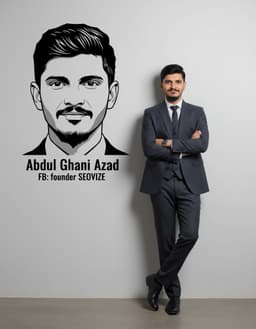
Every Seovize semantic SEO engagement is designed personally by Abdul Ghani — 20+ years of expertise applied to your specific domain, your specific buyers, and your specific topical gaps. No account managers, no junior writers making entity decisions.
About Abdul Ghani →Pricing
$1,250/mo
New SMB sites, local services, low-content websites
Most popular
$2,500/mo
Established service brands and multi-service SMBs
$4,500/mo
Competitive niches and content-led growth
Semantic SEO engagements start at $2,200/mo. All plans include entity mapping, schema implementation, and topic cluster architecture.
FAQ
Start here
Book a free Growth Roadmap call — a structured review of your current entity signals, topical gaps, and what a semantic SEO engagement would look like for your domain.